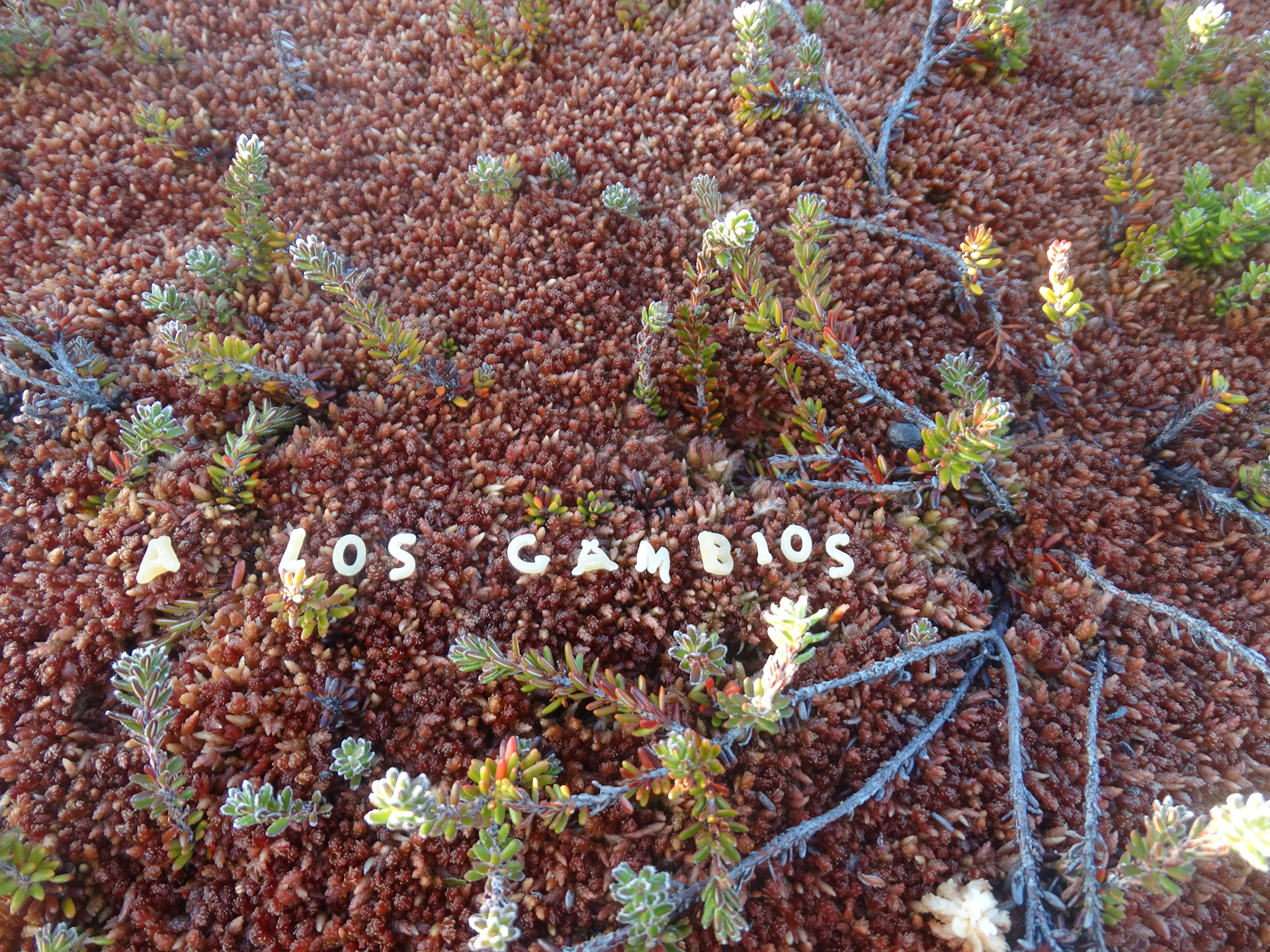
Omora Park, Puerto Williams, Chile
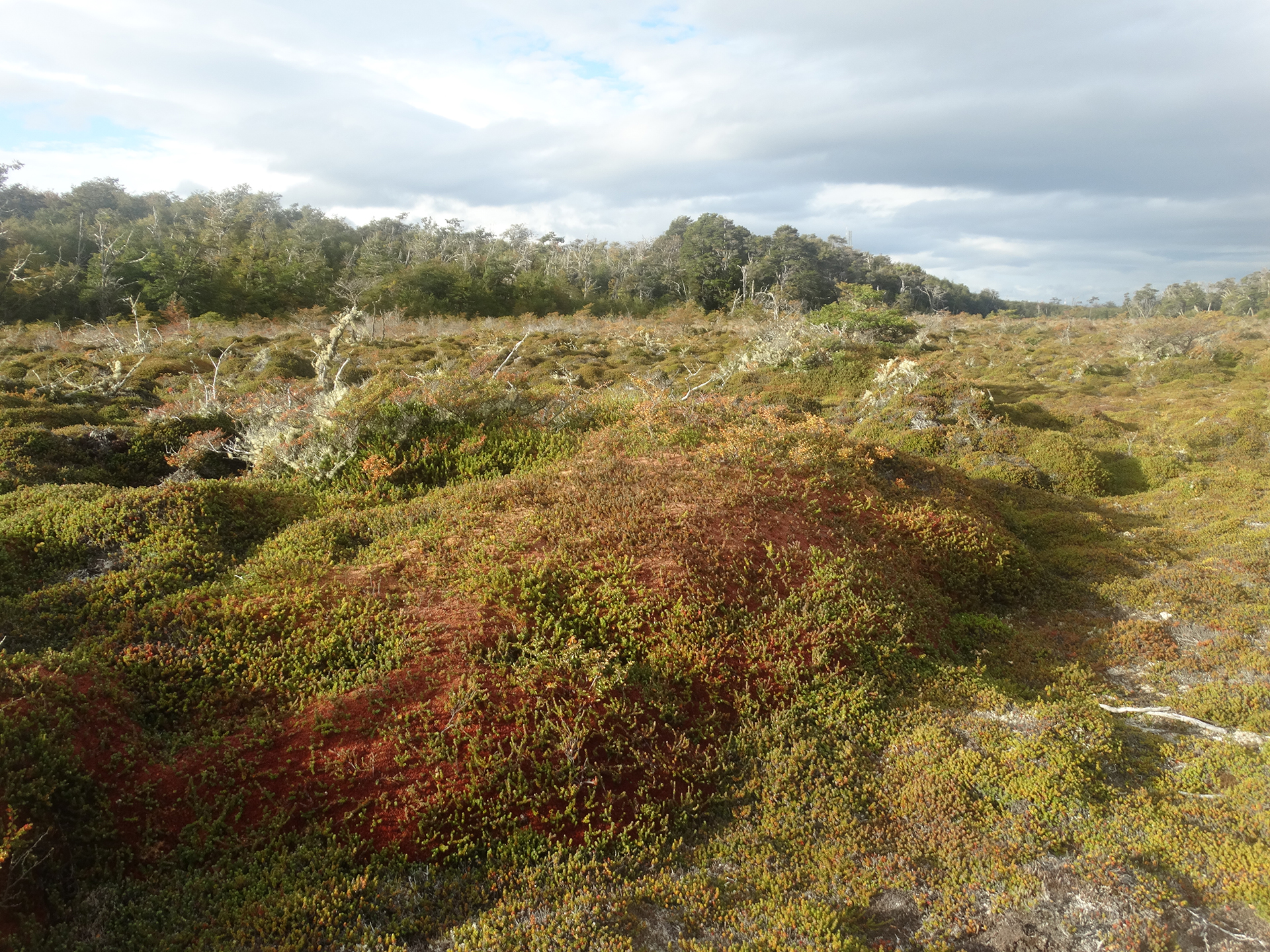
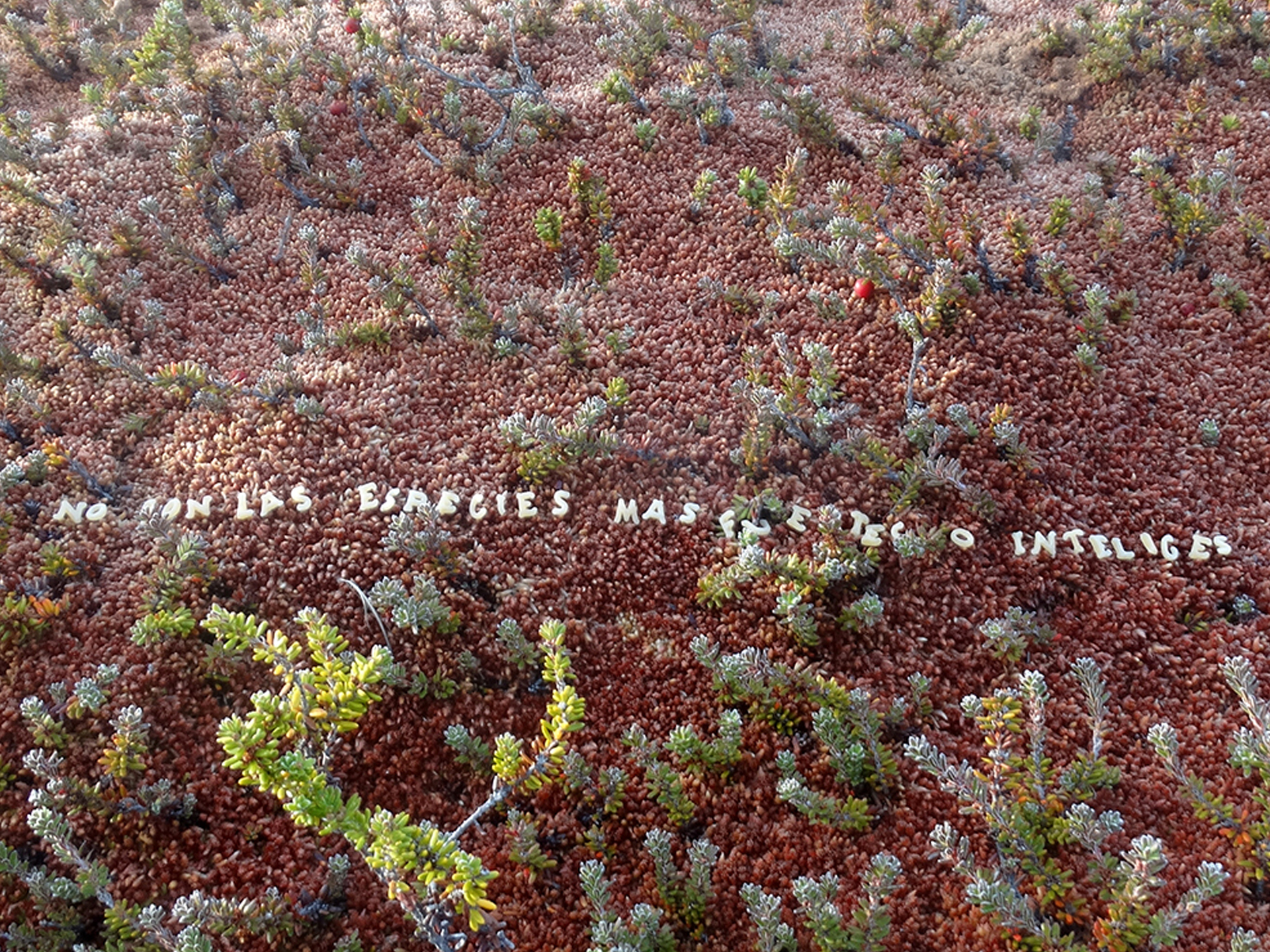
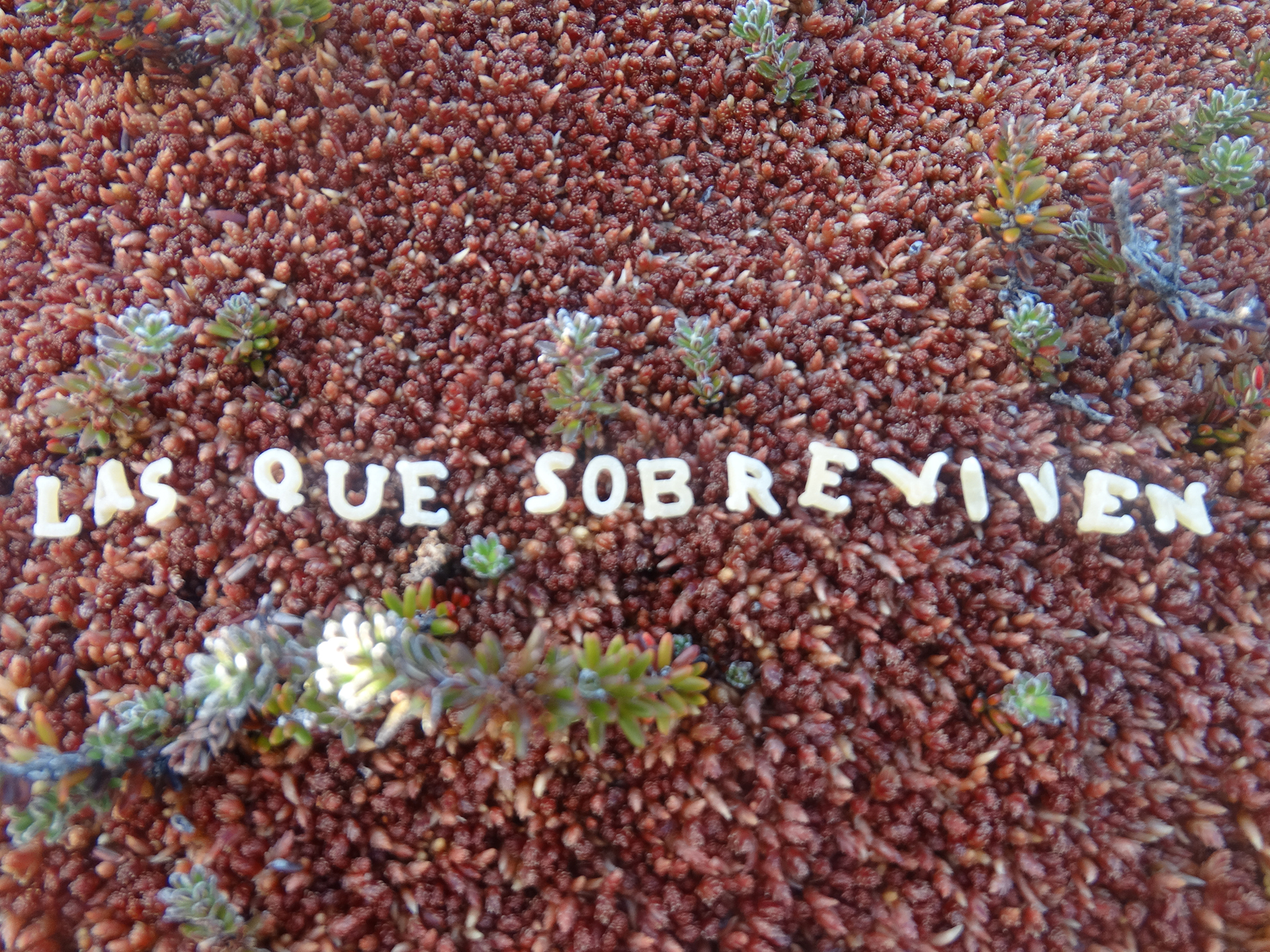
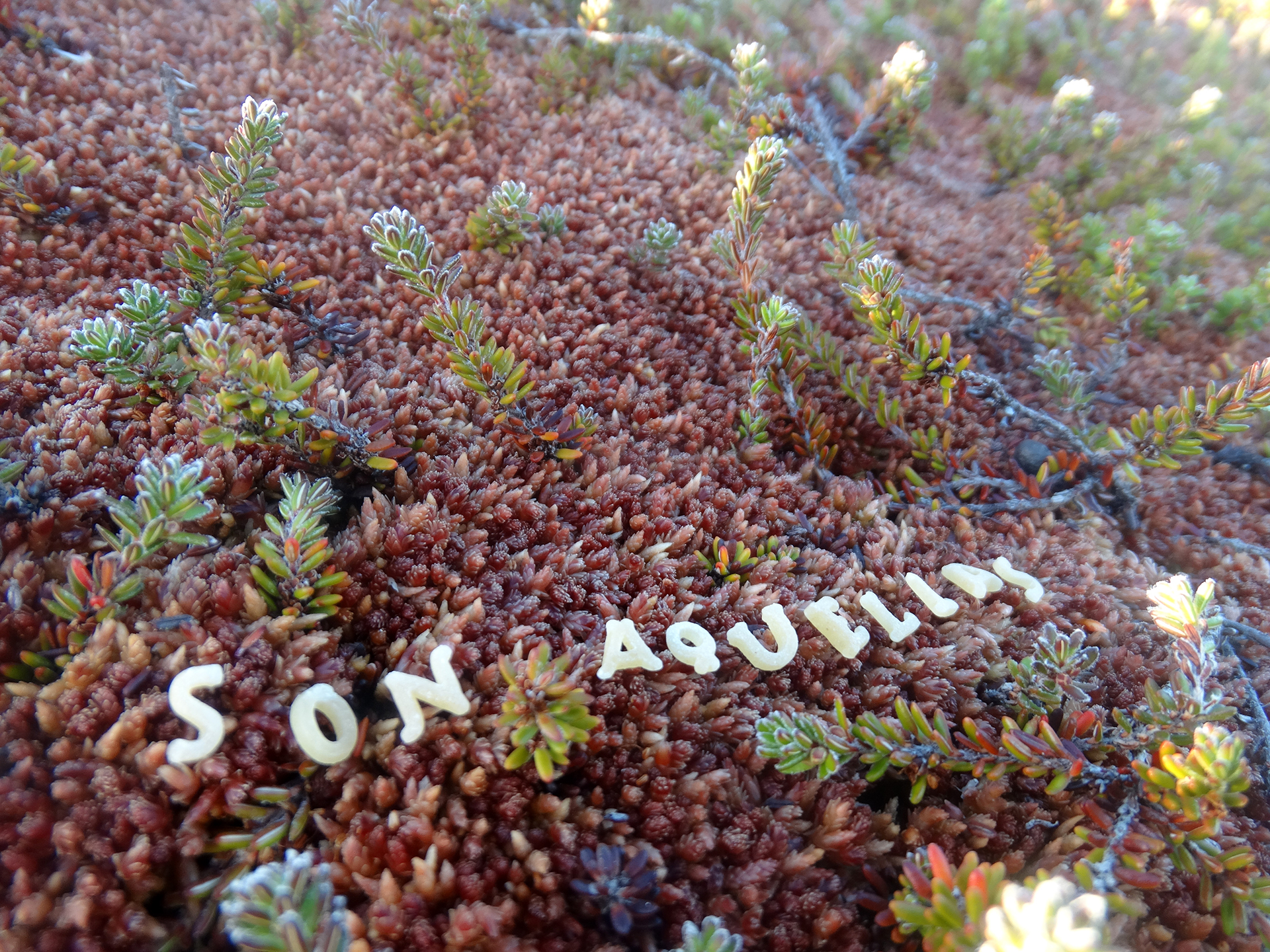
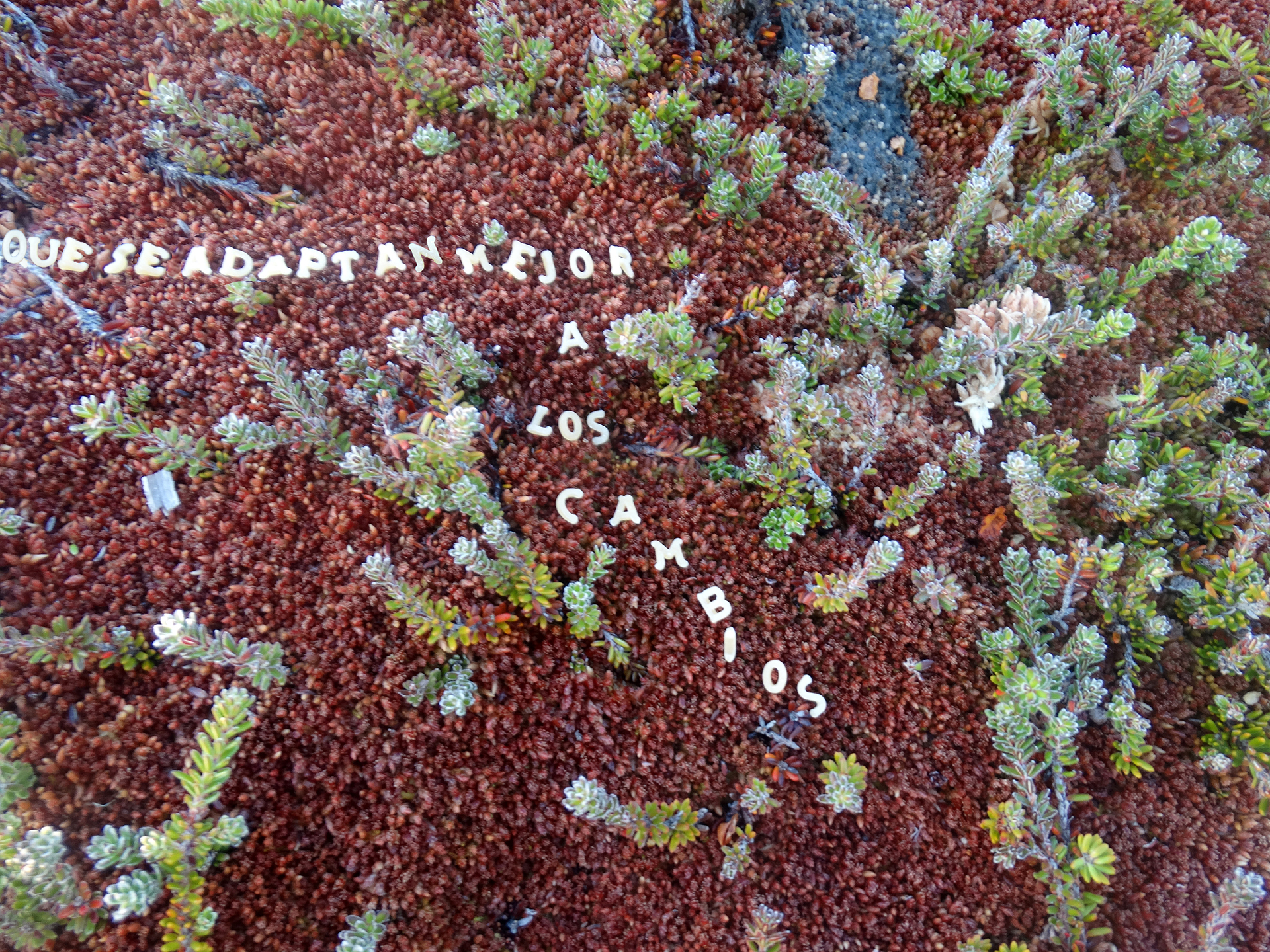
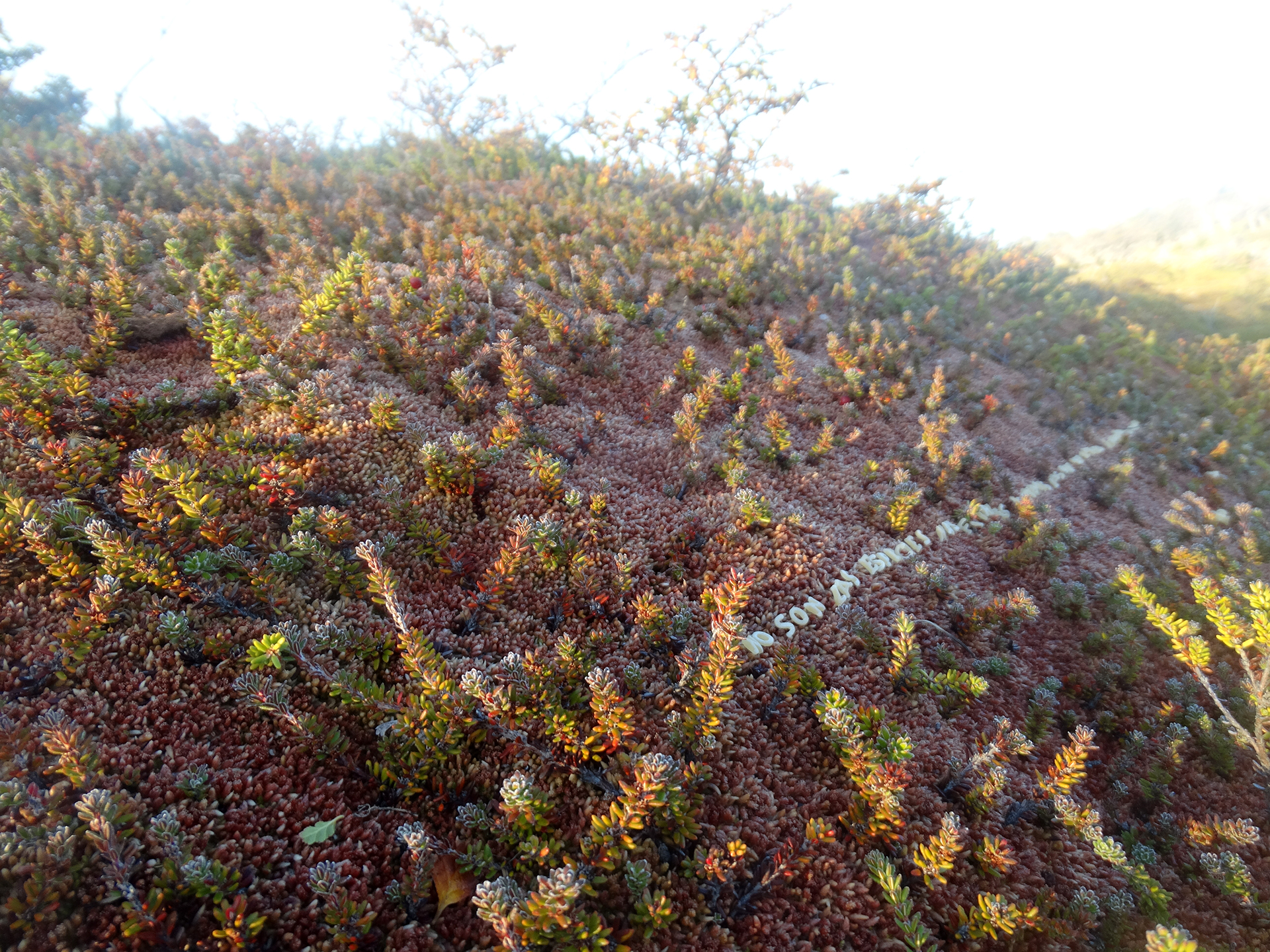
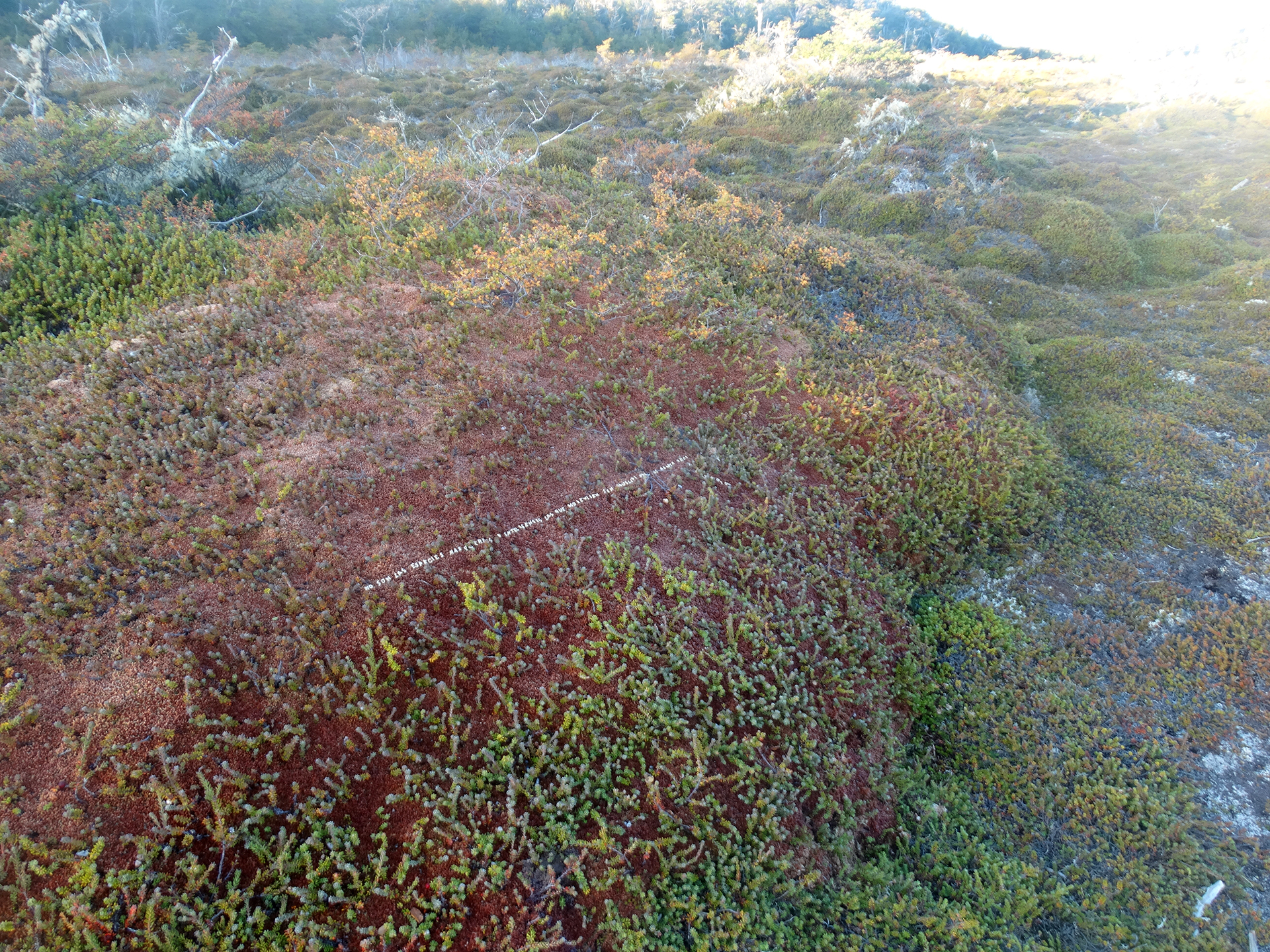
Ephemeral writing of a Charles Darwin (1809–1889) quote, created on a peatland.
“It is not the strongest or the most intelligent species that survive, but those that best adapt to change.,” created using edible wheat letters known as “alphabet pasta.”
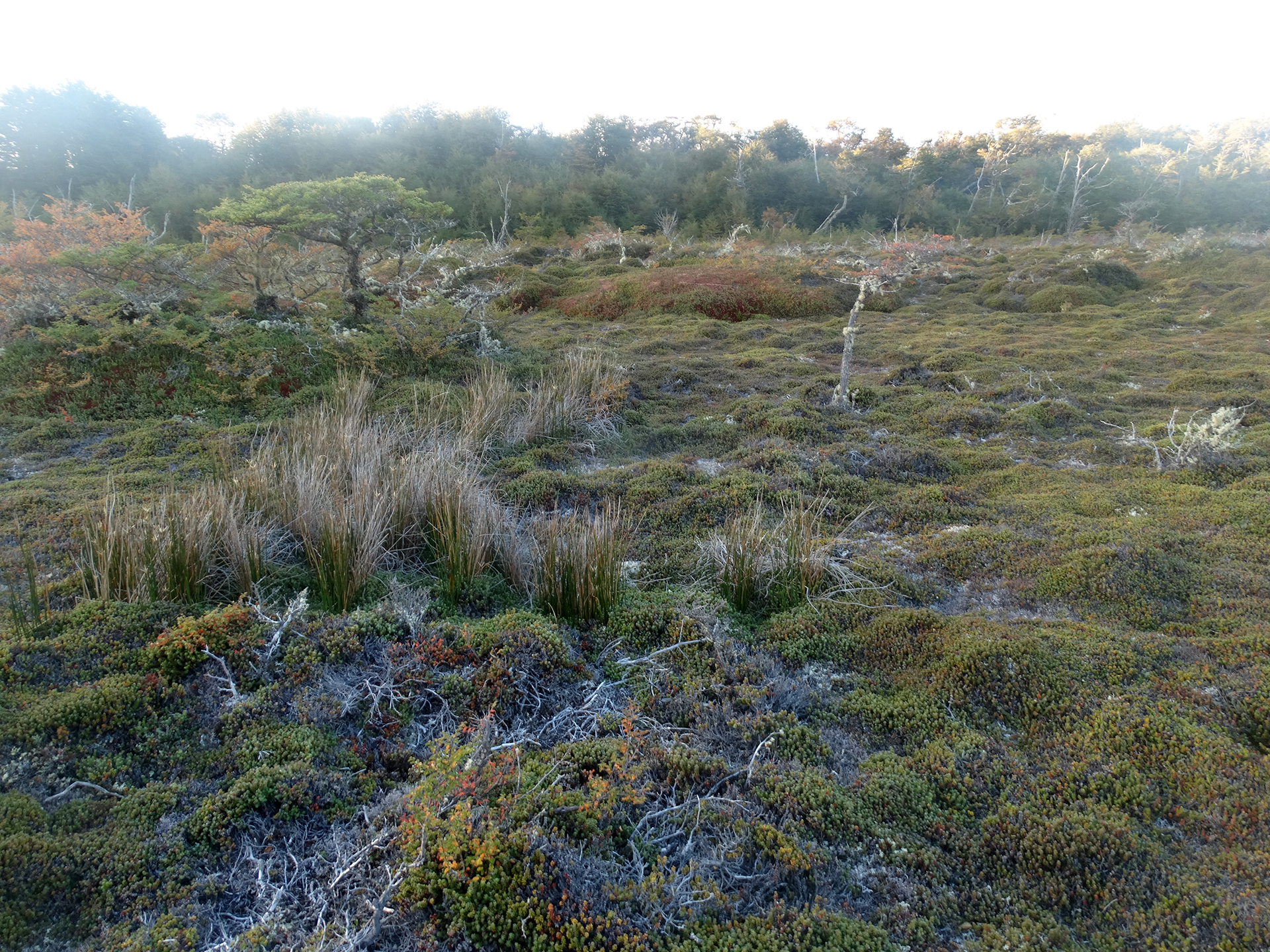
The peatland at Omora Park, in Puerto Williams, is a unique sub-Antarctic ecosystem dominated by Sphagnum mosses. It retains water, stores carbon, regulates the moisture of surrounding forests, and supports flora and fauna adapted to extreme conditions. Its formation began 4,000–6,000 years ago, recording ecological and climatic changes. These peatlands are essential for biodiversity, water balance, and environmental research. (1)
Omora Ethnobotanical Park, founded in 2000, is a private 1,000-hectare reserve on Navarino Island. It hosts the southernmost temperate sub-Antarctic forest in the world, where ñirre, lenga, and coigüe trees coexist with birds such as the fío-fío and cachudito, along with a remarkable diversity of bryophytes and lichens.
One of the park’s programs, “Tourism with a Magnifying Glass”, led by Dr. Ricardo Rozzi and created in 2002, promotes sustainable tourism in the Cape Horn region. It invites visitors to explore the biodiversity of lichens, mosses, and liverworts using magnifying glasses to observe these “miniature forests”, which represent 5% of the global population of these species. (1) Rozzi, R., et al. (2006). Ecology and Conservation of Sub-Antarctic Peatlands at Omora Park, Navarino Island, Chile. University of Magallanes. https://ieb-chile.cl/
(1)Fuente: Rozzi, R., et al. (2006). Ecología y Conservación de Turberas Subantárticas en el Parque Omora, Isla Navarino, Chile. Universidad de Magallanes.
Parque Omora. Puerto Williams, Chile.
Escritura efímera de una cita de Charles Darwin (1809-1889), sobre una turbera.
“No son las especies mas fuertes o inteligentes las que sobreviven, son aquellas que se adaptan mejor a los cambios” utilizando letras de trigo comestible conocidas como “pasta alfabeto”.
La turbera del Parque Omora, en Puerto Williams, es un ecosistema subantártico único dominado por musgos Sphagnum. Retiene agua, almacena carbono, regula la humedad de los bosques circundantes y alberga flora y fauna adaptada a condiciones extremas. Su formación comenzó hace 4.000–6.000 años, registrando cambios ecológicos y climáticos. Estas turberas son esenciales para la biodiversidad, el equilibrio hídrico y la investigación ambiental. (1)
El Parque Etnobotánico Omora, fundado en 2000, es una reserva privada de 1.000 hectáreas en la isla Navarino. Alberga el bosque templado subantártico más austral del mundo, donde cohabitan ñirre, lenga y coigüe, junto con aves como el fío-fío, el cachudito y una notable diversidad de briofitas y líquenes.
Uno de los programas del parque es “Turismo con Lupa”, dirigido por el Dr. Ricardo Rozzi y creado en 2002. Este programa promueve el turismo sustentable en Cabo de Hornos e invita a los visitantes a explorar la biodiversidad de líquenes, musgos y hepáticas utilizando lupas para observar estos «bosques en miniatura» que constituyen el 5% de la población del en el mundo. https://ieb-chile.cl/
https://ieb-chile.cl/ (1)Fuente: Rozzi, R., et al. (2006). Ecología y Conservación de Turberas Subantárticas en el Parque Omora, Isla Navarino, Chile. Universidad de Magallanes.